Summary:
Many organizations discover during an ISO audit that well-designed processes are not always practiced consistently across teams. This blog explores how ISO audits work, why audit findings commonly occur, and the operational gaps that often lead to quality issues. It outlines seven common audit failures, breaks down the ISO audit process, and provides a practical checklist to help teams maintain documentation, records, and corrective actions so they remain audit-ready throughout the year.
An ISO audit is a systematic and independent evaluation of an organization’s processes, documentation, and management systems to verify whether they comply with the requirements of a specific ISO standard.
“On paper, most quality management systems appear perfectly structured, but an audit quickly shows whether those processes are consistently practiced across departments and everyday operations.”
In reality, being certified and being audit-ready are two very different things.
The purpose of ISO standards, at their core, is to guide organizations in maintaining consistent quality, improving processes, and building trust through reliable and standardized operations.
ISO standards continue to serve as one of the most widely adopted frameworks for quality, compliance, and operational consistency worldwide. According to the annual ISO Survey published by the International Organization for Standardization, more than 1.5 million certificates to ISO management system standards have been issued globally, highlighting the widespread adoption of ISO frameworks across industries.
However, widespread adoption does not guarantee audit success. Many audit findings emerge from gaps within the quality management system—outdated procedures, inconsistent documentation, unresolved corrective actions, or unclear process ownership.
The sections ahead explain what ISO audits involve, why they become challenging in large organizations, and how teams can stay audit ready.
What is ISO Audit?
Definition: An ISO audit is a structured evaluation of an organization’s quality management system and operations processes to verify compliance with the requirements of a specific ISO standard.
Auditors review documentation, operational records, and employee practices to confirm that processes are implemented consistently and aligned with the organization’s quality management framework.
For many organizations, maintaining this level of audit readiness requires clear documentation control, accessible records, and traceable process evidence across departments.
According to terminology defined in ISO 9000:2015, an audit is:
In practice, auditors review procedures, examine records, observe how work is performed, and interview employees to confirm that documented processes are consistently followed in daily operations.
These activities help organizations verify that their quality management systems function as intended across departments and operational workflows while ensuring alignment with the quality management principles of ISO 9001.
ISO audits are commonly conducted for management system standards such as:
- ISO 9001 – Quality management and continuous improvement
- ISO 14001 – Environmental management
- ISO/IEC 27001 – Information security management
- ISO 45001 – Occupational health and safety
- ISO 22000 – Food safety management
Regardless of the standard being assessed, the purpose of an ISO audit remains the same: to verify compliance, confirm that management system processes operate effectively, and identify gaps that require corrective action to maintain operational consistency.
ISO Audits vs Other Quality Audits
Organizations often perform different types of audits to evaluate quality, compliance, and operational performance. While these audits may seem similar, an ISO audit specifically focuses on verifying whether an organization’s processes align with the requirements of a particular ISO standard, such as ISO 9001.
Other types of audits may examine internal performance, supplier capabilities, or regulatory compliance. The table below highlights how ISO audits differ from other commonly used quality audits.
|
Audit Type |
Primary Purpose |
Typical Scope |
|
ISO Audit |
Verify compliance with an ISO standard |
Processes, documentation, and records aligned with ISO requirements |
|
Internal Quality Audit |
Evaluate internal processes and identify improvement opportunities |
Operational workflows, procedures, and process effectiveness |
|
Supplier Audit |
Assess a supplier’s quality management practices |
Supplier processes, production controls, and quality assurance systems |
|
Regulatory Audit |
Verify compliance with legal or industry regulations |
Regulatory requirements, statutory obligations, and compliance documentation |
In most cases, internal quality audits play an important role in preparing teams for external ISO certification or surveillance audits by identifying process gaps early.
ISO 9001 Internal Audits: Why They Matter
ISO 9001 internal audits play a critical role in evaluating whether a quality management system conforms to the organization’s own requirements and to the requirements of the standard.
According to Clause 9.2 of ISO 9001:2015, organizations are required to conduct internal audits at planned intervals to determine whether the quality management system is effectively implemented and maintained.
Unlike certification audits, which verify compliance with the standard, internal audits allow organizations to review their own processes and identify improvement opportunities before external assessments occur.
In practice, internal audits involve reviewing procedures, examining records, observing how processes are performed, and speaking with employees responsible for the activities. Digital quality management systems (eQMS) are increasingly used to organize audit programs, document findings, and manage corrective actions.
Why ISO Audits Fail in Large Organizations
ISO audits rarely fail because teams misunderstand the standard. In large organizations, the greater challenge is maintaining consistent processes across departments, locations, and teams.
Even when the quality team designs a well-structured management system, daily operations can gradually deviate from documented procedures. Inspection records may be stored in different formats, corrective actions may lose visibility over time, and employees may not always be aware of the latest procedures.
Ownership gaps also contribute to audit findings. While quality teams maintain documentation, operational teams generate the records that auditors review. When evidence is scattered across systems, inconsistencies become more visible during the audit.
Expert Perspective-
In large enterprises, the biggest audit challenge is not documentation but visibility. When records, corrective actions, and training evidence are spread across multiple systems, even well-defined processes become difficult to verify during an audit.
7 Common ISO Audit Failures and How to Prevent Them
ISO audit findings usually arise from small operational gaps that develop over time, such as delayed corrective actions, missing records, or inconsistent practices across departments. These failures typically become visible during audits and often reflect the maturity of an organization’s quality management system.
Recognizing these patterns early helps organizations address systemic issues instead of treating audit findings as isolated problems.
| Audit Observation | What It Usually Indicates | Operational Risk |
|---|---|---|
| Employees referencing different versions of the same procedure | Weak document control practices | Teams follow inconsistent processes |
| Internal audit findings repeating year after year | Issues identified but not properly resolved | Recurring issues |
| Nonconformances logged but left open for long periods | Lack of ownership or tracking | Problems remain unresolved |
| CAPA actions closed quickly without evidence | Superficial root cause analysis | Issues reappear later |
| Employees unsure about procedures during interviews | Training gaps or poor communication | Process variation across teams |
| Difficulty locating records during the audit | Decentralized record management | Loss of traceability |
| Last-minute document updates before the audit | Reactive compliance approach | High audit stress and errors |
Here are the seven most common ISO audit failures.
Failure 1: Poor Documentation Control
Weak document control practices are one of the most common causes of audit findings in large organizations.
Auditors typically begin by reviewing procedures and work instructions to understand how a process is designed to operate. As organizations grow, however, documents may be stored across shared drives, emails, or local folders. When this happens, employees may unknowingly follow outdated procedures while newer revisions exist elsewhere.
Maintaining controlled access to approved documents and a clear revision history helps ensure employees always work from the latest version while preserving traceability.
Failure 2: Lack of Internal Audit Readiness
Internal audits are intended to verify whether processes within the quality management system operate as documented.
In many organizations, however, internal audits gradually become periodic compliance activities rather than meaningful operational reviews. When audits are rushed or findings are not examined in depth, process gaps remain unnoticed until external certification audits.
Organizations that treat internal audits as continuous system reviews are far more likely to identify issues early.
Failure 3: Untracked Nonconformances
Nonconformances are a normal part of any quality management system and represent deviations from approved processes or quality requirements that must be investigated and resolved. Problems arise when they are recorded but not actively monitored.
Issues identified during internal audits, inspections, or customer complaints may remain open for long periods if ownership and timelines are unclear. As a result, the same non-conformity often appears again in future audits.
Clear ownership, defined timelines, and visibility into open issues help ensure non-conformities move toward closure instead of remaining unresolved.
Failure 4: Ineffective CAPA
Corrective and Preventive Actions (CAPA) are designed to address the root cause of problems, not just the immediate issue. A structured CAPA process helps organizations investigate problems systematically and prevent recurring quality issues.
Audit findings often occur when corrective actions focus only on fixing what happened rather than investigating why it occurred. Without proper root cause analysis, similar issues tend to reappear over time.
Documenting investigations, corrective actions, and follow-up verification ensures problems are resolved systematically.
Failure 5: Inconsistent Employee Training
Variation in how employees perform the same process is another common audit finding.
Even when procedures are documented, employees across departments or locations may interpret them differently if training is informal or inconsistent. Updates to procedures may also fail to reach everyone responsible for performing the task.
Maintaining clear training records and regularly updating employees on procedural changes helps reduce these variations.
Failure 6: Poor Audit Evidence
During an audit, organizations must demonstrate that documented processes are actually followed.
This requires objective evidence such as approvals, inspection records, training logs, or corrective action documentation. When records are scattered across spreadsheets, emails, or local systems, retrieving them during an audit becomes difficult.
Keeping records centralized and easily accessible improves traceability and simplifies audit verification.
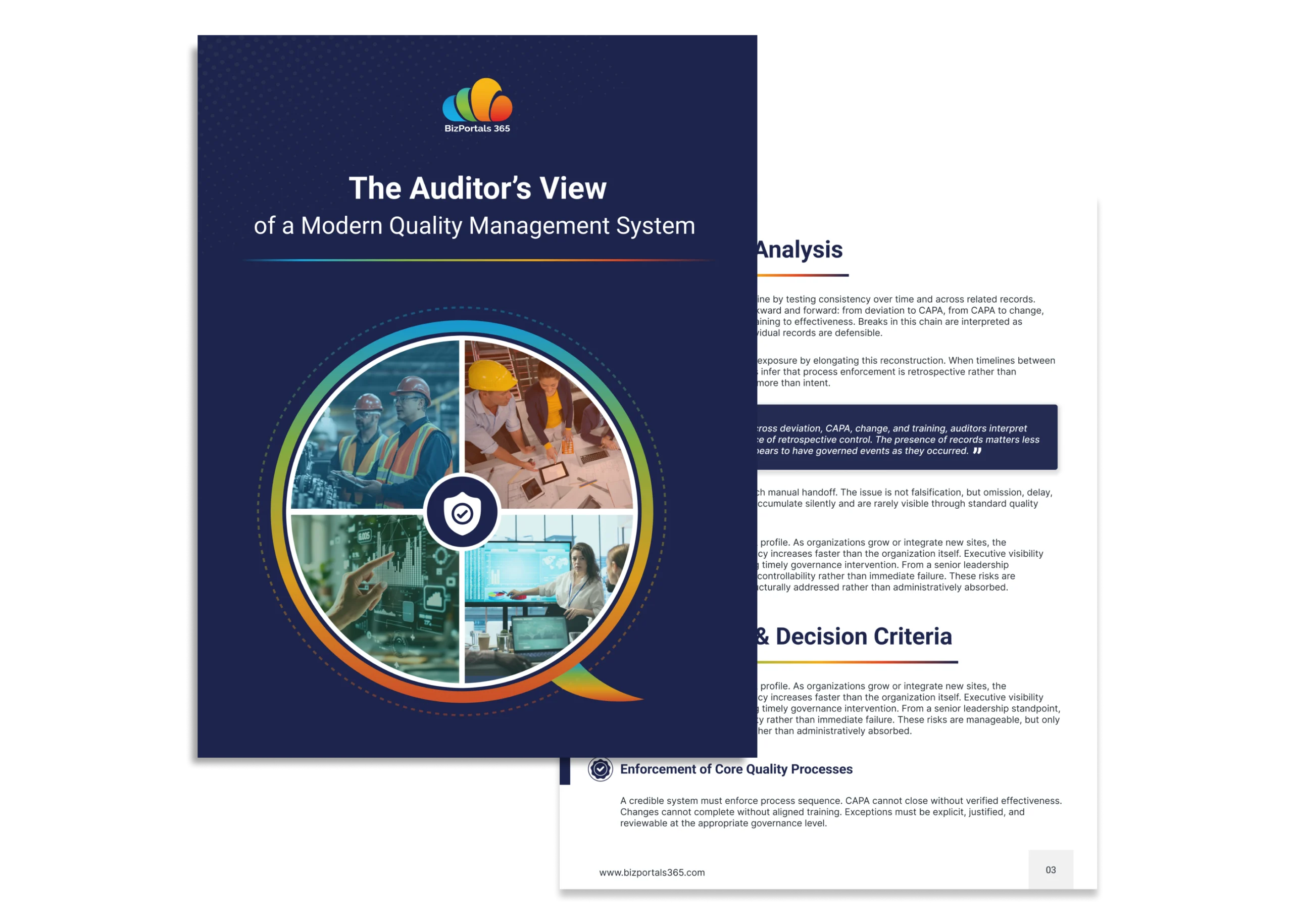
Understand what auditors actually look for when evaluating documentation, evidence traceability, and process compliance.
Download NowFailure 7: Last-Minute Audit Preparation
A reactive approach to audit preparation often creates unnecessary pressure.
When preparation begins only a few weeks before an audit, teams scramble to gather records, update procedures, and close pending issues. This increases the risk of overlooked gaps.
Organizations that maintain ongoing visibility into documentation, actions, and records throughout the year approach audits with far less disruption.
Expert Perspective-
In mature quality management systems, most audit findings do not originate during the audit itself—they surface issues that have remained unnoticed within daily operations. Audits simply make these hidden process gaps visible.
ISO Audit Process: Key Steps Explained
The ISO audit process follows a well-structured sequence designed to evaluate whether an organization’s processes and systems comply with the requirements of a specific ISO standard. While the exact scope may vary depending on the standard or certification body, most ISO audits follow a similar, standard set of steps.
By understanding this process you can prepare documentation, gather evidence, and ensure employees are ready to demonstrate how processes are actually performed during the audit.
|
Step |
What Happens |
Typical Evidence |
|
Audit Planning |
The auditor defines the audit scope, objectives, criteria, and schedule. Relevant departments and processes are identified. |
Audit plan, scope documents, audit schedule |
|
Document Review |
Auditors review policies, procedures, and records to understand how the management system is designed to operate. |
Quality manual, procedures, work instructions, documented policies |
|
On-Site Audit Activities |
Auditors observe processes, review records, and interview employees to verify that documented procedures are being followed. |
Process records, inspection logs, training records, operational documents |
|
Audit Findings |
Any gaps between documented processes and actual practices are recorded as observations or non-conformities. |
Non-conformity reports, audit notes, observation records |
|
Corrective Actions |
The organization investigates root causes and implements actions to resolve identified issues. |
CAPA records, root cause analysis documentation, action plans |
|
Follow-Up or Certification Decision |
Auditors verify whether corrective actions have been implemented effectively and determine the certification outcome. |
Corrective action verification records, closure reports |
Although the process itself is structured, audit outcomes often depend on how consistently organizations maintain documentation, training records, corrective actions, and operational evidence throughout the year rather than preparing only when an audit is scheduled.
ISO 9001 Audit Preparation Checklist
Preparing for an ISO audit involves confirming that key parts of the quality management system are functioning as expected before an external review takes place. This ready-to-use checklist highlights some of the areas you can typically verify when preparing for an ISO 9001 audit or internal quality audit.
Audit Preparation Area and What to Verify
- Document accessibility: Employees can easily locate the latest approved documents, procedures, and work instructions.
- Record availability: Operational records like inspection logs, approvals, and training records are accessible when requested.
- Internal audit completion: Scheduled internal audits have been conducted, and findings have been reviewed.
-
Corrective action progress:
Previously identified issues show clear sign of effective closure. -
Employee awareness:
Employees understand the procedures relevant to their roles. -
Process consistency:
The same process is performed consistently across departments or sites. -
Evidence traceability:
Records clearly show when activities were performed and who approved them. -
Management oversight:
Stakeholders’ reviews or periodic system reviews have been documented.
This checklist serves as a practical way to confirm that everyday activities within the quality management system are functioning as expected before an external audit takes place. Rather than reviewing these areas only during formal audit preparation, some organizations incorporate them into their regular quality routines. A digital quality management system often support this approach by allowing teams to review audit-related activities, records, and corrective actions as part of ongoing strategy rather than a one-time pre-audit exercise.
The New Audit Reality
For many years, ISO audits were treated as periodic events. Organizations typically prepared for them once or twice a year by gathering documents, reviewing records, and addressing pending issues. However, as organizations grow more complex, this approach is becoming increasingly difficult to sustain.
Today, auditors expect to see evidence that processes are consistently followed throughout the year, not just shortly before an audit. Documentation, corrective actions, training records, and operational evidence must remain traceable and accessible at any time.
This shift is changing how organizations manage their quality systems. Instead of preparing for audits as isolated events, many are adopting a digital quality management system (QMS) that provide continuous visibility into documentation, actions, and records across teams. In this environment, audits no longer depend on last-minute preparation. They simply reflect how well the system is functioning in everyday operations.
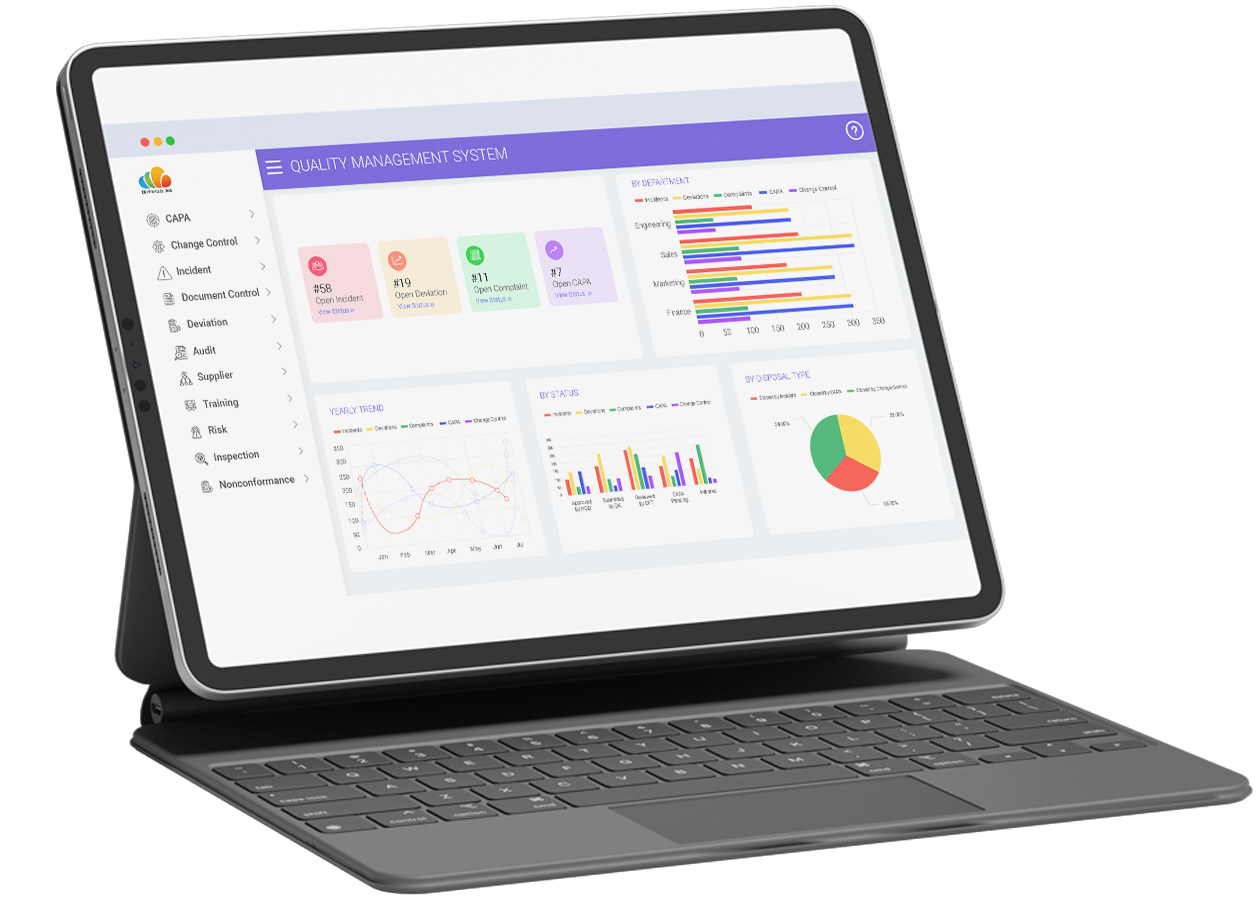
See how teams maintain documentation, audits, and corrective actions.
Book a Demo