Change control software offers a well-structured approach to mitigate the potential impacts of process modifications or alterations on product quality and regulatory compliance. It enables quality teams to easily document, evaluate, and approve changes before they are implemented.
Effective change control process is a crucial component of quality management. It helps regulated industries mitigate risks, improve traceability, and safeguard the integrity of their products.

A well-structured and documented change control process helps organizations avoid non-compliance penalties by ensuring that the modifications align with regulatory requirements imposed by industry-specific regulators.

Cross-functional collaboration is the key to effective change management. A robust change control system offers a unified platform that brings all the stakeholders, documentation, and statistics together for enhanced efficiency and better decision-making.

Modifications in the ongoing process can introduce risks that compromise the quality and safety of the product or service. However, robust change control software lets users proactively identify and mitigate risks, minimizing unintended consequences.

Having a digitized process for managing and documenting changes helps promote consistency and scalability within the organization. Users can standardize how modifications are proposed, evaluated, and executed, reducing the chances of errors and variations.

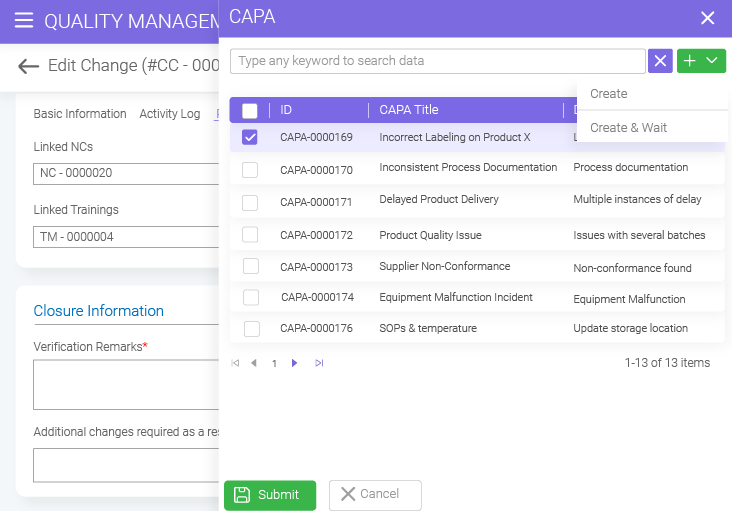
Right from detecting issues to executing corrective and preventive actions, each stage is documented and records stakeholders’ actions, providing a clear audit trail for inspections.
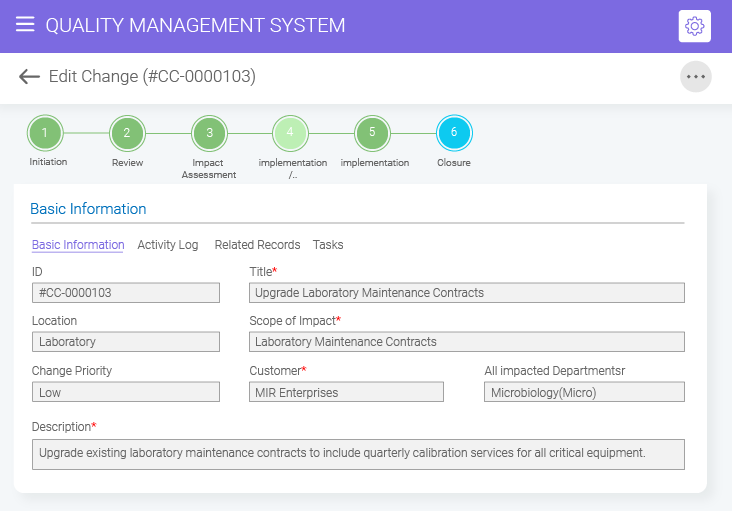
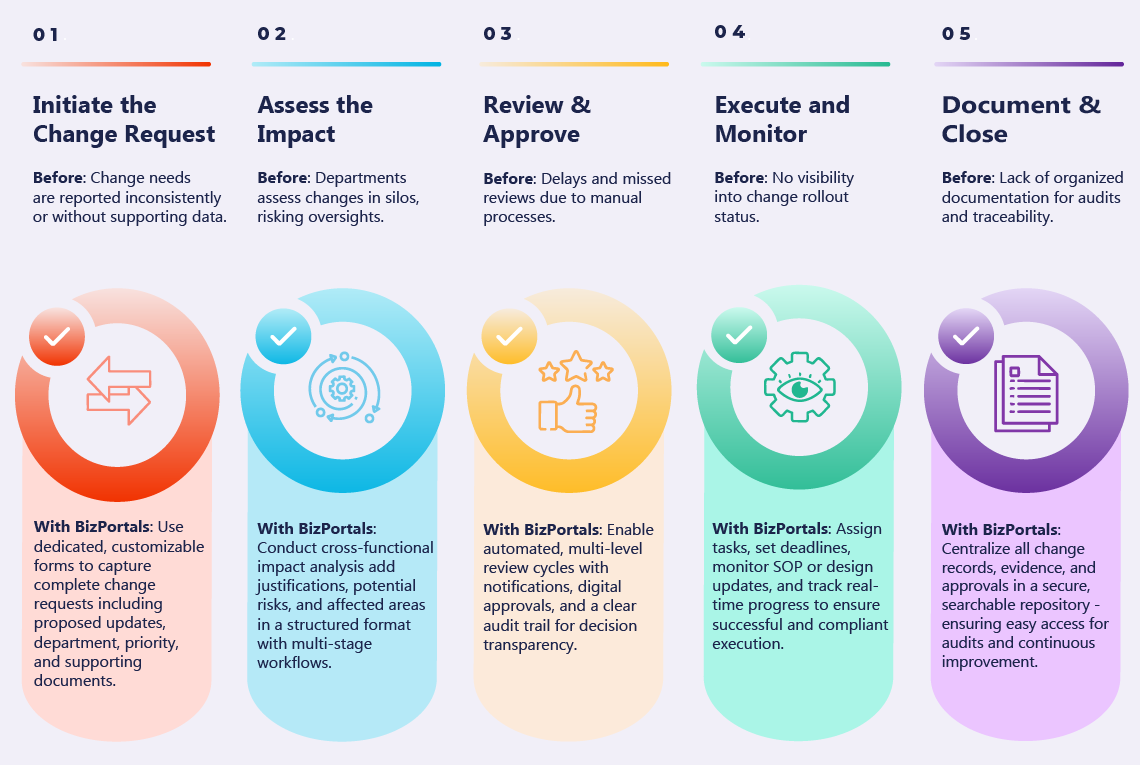
Process changes can stem from factors like new market demands, quality improvements, or addressing existing quality issues. The quality team initiates the process when a need for change is identified. The change control system offers dedicated forms with customizable fields to initiate the change request. Users can add relevant details like proposed changes, description, priority, and department, and add attachments to record complete and accurate change requests.
The next crucial step is assessing the impact of the proposed changes. BizPortals change control software features a multi-stage change control form that includes a dedicated stage for thorough impact assessment. The initiator can add justifications, impact assessment findings, concerned department, etc., and request further review by the designated authority.
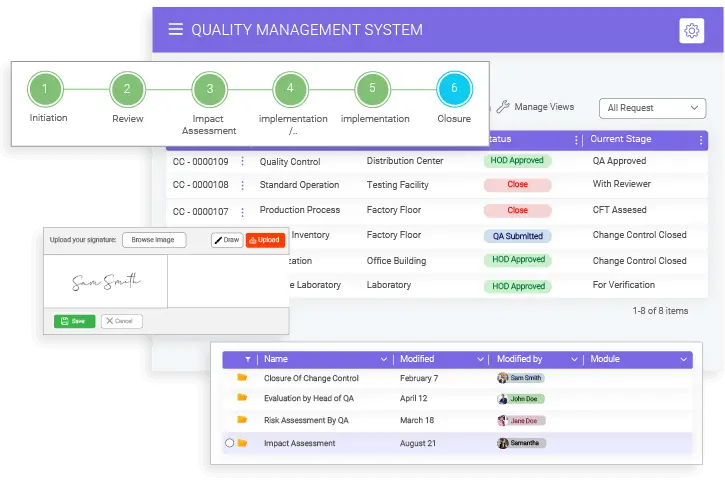
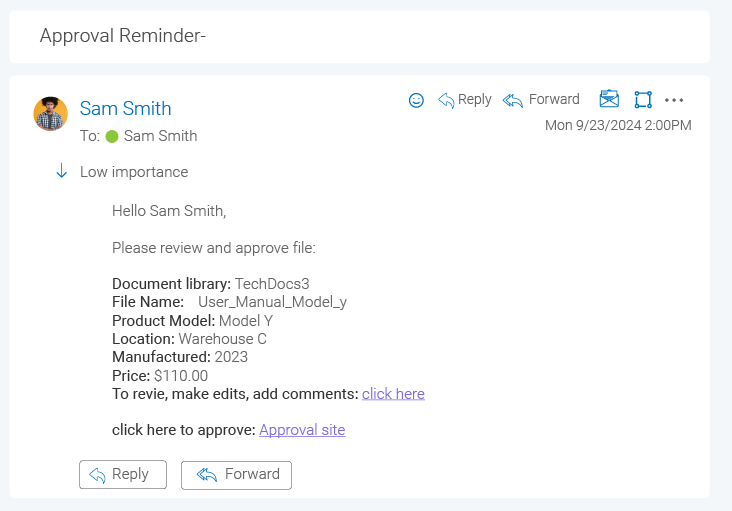
The change control process involves multiple reviews and approvals by department heads, regulatory specialists, quality managers, and other stakeholders. However, BizPortals change management enables users to add approval workflows at different stages, track responses, and set notifications and alerts for better decision-making.
Once approved, the change control process is ready to implement and may involve updating SOP documents, processes, and products. Creating checklists, setting deadlines, assigning responsibilities, and tracking progress helps quality teams ensure the changes are executed effectively and are compliant with the required quality standards.
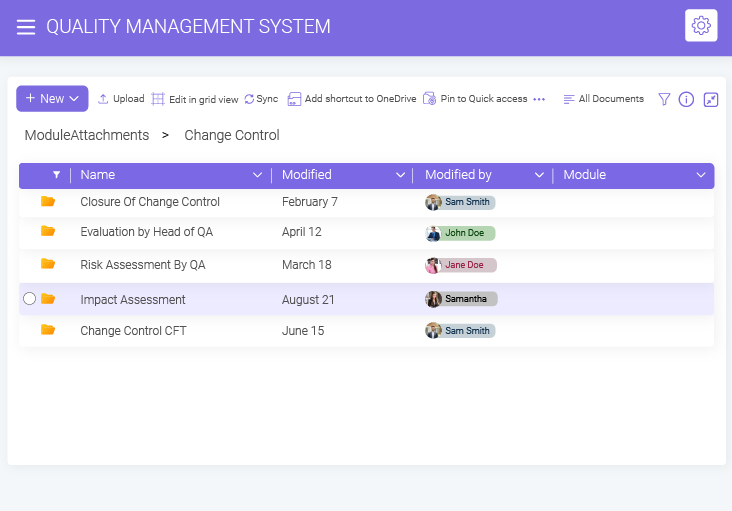
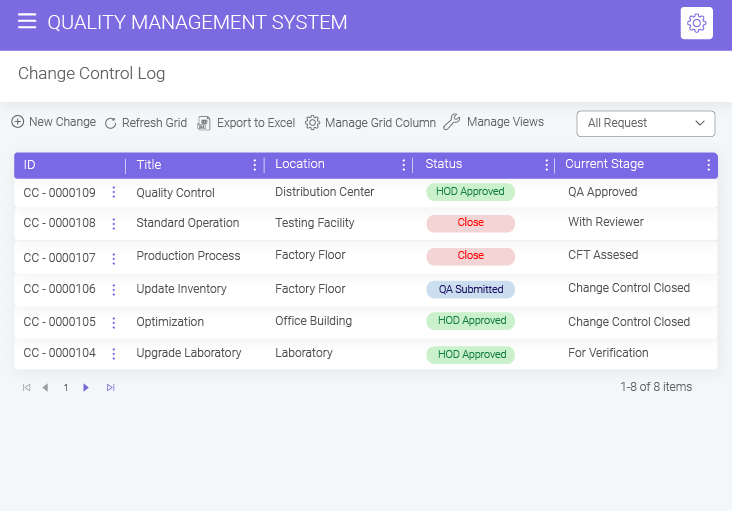
Documenting the change control process is essential to improving traceability, ensuring regulatory compliance, and fostering accountability. From initiating to validation and final sign-off, BizPortals change control software helps users record forms and documents at each stage. Furthermore, it offers a dedicated repository to organize change control documents for faster access and future reference.

Process changes can stem from factors like new market demands, quality improvements, or addressing existing quality issues. The quality team initiates the process when a need for change is identified. The change control system offers dedicated forms with customizable fields to initiate the change request. Users can add relevant details like proposed changes, description, priority, and department, and add attachments to record complete and accurate change requests.


The next crucial step is assessing the impact of the proposed changes. BizPortals change control software features a multi-stage change control form that includes a dedicated stage for thorough impact assessment. The initiator can add justifications, impact assessment findings, concerned department, etc., and request further review by the designated authority.
The change control process involves multiple reviews and approvals by department heads, regulatory specialists, quality managers, and other stakeholders. However, BizPortals change management enables users to add approval workflows at different stages, track responses, and set notifications and alerts for better decision-making.


Once approved, the change control process is ready to implement and may involve updating SOP documents, processes, and products. Creating checklists, setting deadlines, assigning responsibilities, and tracking progress helps quality teams ensure the changes are executed effectively and are compliant with the required quality standards.
Documenting the change control process is essential to improving traceability, ensuring regulatory compliance, and fostering accountability. From initiating to validation and final sign-off, BizPortals change control software helps users record forms and documents at each stage. Furthermore, it offers a dedicated repository to organize change control documents for faster access and future reference.
| Key Capability | Manual Change Control Process | BizPortals QCFlow (Change Control Software) |
|---|---|---|
| Change Request Handling |
Disparate emails or paper forms; prone to mismanagement
|
Centralized platform with customizable forms and role-based access
|
| Workflow Configuration |
Static, manual steps with inconsistent follow-up
|
Fully configurable workflows with multi-level approvals and notifications
|
| Audit & Traceability |
Limited traceability; hard-to-track records
|
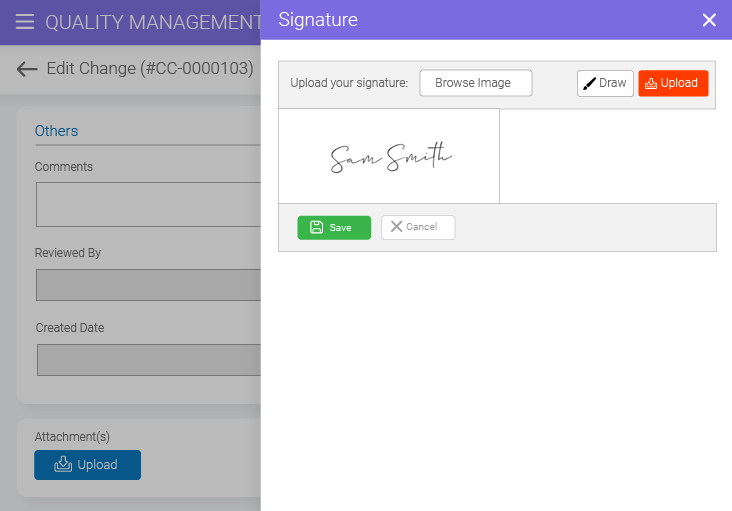
Built-in audit trails, version control, and e-signatures
|
| Cross-Module Integration |
Isolated tracking with no cross-functional alignment
|
Links changes to CAPA, audit, training, and document control modules
|
| Visibility & Monitoring |
Manual updates; limited visibility into change status
|
Real-time dashboards for status tracking and progress monitoring
|
| Compliance Support |
Increased risk of non-compliance and delays
|
Regulatory-ready templates and digital documentation
|