Summary:
A quality management system can appear compliant while important process weaknesses remain hidden beneath the surface. This guide explains how quality management system auditing helps uncover those weaknesses, classify findings consistently, identify recurring issues, and turn audit results into meaningful quality and compliance improvements.
Most organizations discover this the hard way. Process gaps, outdated practices, incomplete records, and ineffective corrective actions rarely announce themselves in day-to-day operations. They surface during an audit. By then, they have often been developing quietly for months.
That is precisely why QMS audits exist. They provide a structured, evidence-based way to verify whether processes are being followed, whether they remain effective, and whether they continue to meet quality and compliance requirements before gaps become costly problems.
This guide covers how QMS audits are planned, conducted, and followed through to closure. It explains how auditors evaluate evidence, classify findings, and how those findings drive corrective actions that reduce risk and support continuous improvement.
What is a Quality Management System (QMS) Audit?
A quality management system (QMS) audit is a structured, evidence-based review of an organization’s quality management system to determine whether it conforms to defined requirements and operates as intended.
Most commonly, this means evaluating compliance with established quality standards such as ISO 9001. Audits may also assess internal procedures, customer requirements, and contractual or regulatory obligations.
With more than 1.4 million ISO 9001 certificates active worldwide, quality management auditing is one of the most widely practiced formal review mechanisms in global business. Yet a certificate only confirms that a system was assessed at a specific point in time. It does not confirm that the system continues to function effectively today. That is what an audit determines.
To do that, auditors examine processes, records, controls, responsibilities, and performance data. They look beyond conformity on paper and seek evidence that the system is operating as designed across the organization.
What’s the Difference Between a QMS Audit and an Inspection?
One of the most common misunderstandings in quality management is treating audits and inspections as if they are the same activity. They aren’t.
An inspection asks a product question: Does this item meet specification?
An audit asks a system question: Is the process that produces this item working the way it should?
A company can pass every inspection and still have underlying process weaknesses. Inspections show whether products meet requirements today; audits reveal whether the system can keep meeting them tomorrow.
The most useful difference between audits and inspections is this:
Inspection data tells you where defects occurred. Audit data tells you why they occurred. Organizations that rely only on inspections tend to spend more time correcting problems. Organizations that audit their processes effectively are often able to prevent many of those problems from occurring in the first place.
Why QMS Audits Are Important?
Quality management system audits help organizations verify compliance, identify process weaknesses, reduce quality risks, strengthen corrective actions, and support continual improvement.
Many organizations start auditing because they need to maintain ISO 9001 certification. In practice, however, the value of a QMS audit extends far beyond passing an external assessment. A well-executed audit helps organizations:
- Detect process gaps before they affect product or service quality
- Verify that procedures are being followed consistently across teams
- Identify recurring issues that require corrective action
- Improve compliance with customer, regulatory, and internal requirements
- Provide leadership with visibility into areas of risk and improvement
- Strengthen overall confidence in the effectiveness of the quality management system
Together, these outcomes strengthen an organization’s overall quality assurance efforts by improving process consistency, compliance, and continual improvement.
What Are the Three Types of QMS Audits?
The three main types of QMS audits are first-party (internal), second-party (supplier), and third-party (certification) audits. While they follow similar principles, each is conducted for a different reason. In turn, that reason shapes the scope, evidence, and expected outcomes of the audit.
| Audit Attribute | First-Party (Internal Audit) | Second-Party Audit | Third-Party Audit |
|---|---|---|---|
| Conducted by | Your organization’s trained auditors | A customer, business partner, or your organization auditing a supplier | An independent certification or conformity assessment body |
| Primary purpose | Evaluate internal processes and drive improvement | Assess supplier, contractor, or partner performance | Verify conformity against a recognized standard |
| Typical frequency | Planned intervals based on the audit program | Risk-based or business-driven | Certification, surveillance, and recertification cycles |
| Key focus | Process effectiveness and continual improvement | Capability, compliance, and performance | System conformity and certification readiness |
| What happens with findings | Routed into internal corrective actions | May require supplier or contractor corrective actions | Can affect certification status |
If your primary responsibility is planning or conducting internal quality audits, our detailed guide explains the complete process, responsibilities, checklists, and best practices in greater depth.
The QMS Audit Process: Nine Stages from Planning to Closure
The QMS audit process typically follows nine stages, from planning and scope definition to corrective action and effectiveness verification. Understanding how each stage fits together helps ensure audits lead to meaningful improvement rather than becoming a paperwork exercise.
Stage 1: Establish the Audit Program
Every internal audit begins with an audit program that defines what will be audited, when, and how often, structured to ensure the entire QMS receives appropriate coverage within each review cycle.
The strongest programs are not built around departmental convenience. They are shaped by audit history, CAPA trends, customer complaints, supplier performance, and process risk, because those signals reveal where audit attention is genuinely needed.
Note: This stage primarily applies to internal audits. Certification and supplier audits are generally scheduled by external requirements, contractual obligations, or supplier risk considerations.
Stage 2: Define Scope and Objectives
Audit scope is often where the quality of an audit is decided. When the scope is too broad, teams spend significant time collecting evidence but still miss the issues that matter most.
Define exactly what will be assessed, including the process, department, location, applicable procedures, and audit criteria. The most effective audits are built around a clear objective, whether that is verifying compliance, evaluating effectiveness, following up on previous findings, or assessing a known area of risk.
Stage 3: Select and Prepare the Audit Team
Auditor independence can be difficult to maintain, particularly in smaller organizations where employees are responsible for multiple functions.
Auditors should be competent in the area being assessed and independent of the work being audited. Before the audit begins, review previous audit reports, open CAPAs, complaints, process metrics, and unresolved findings. Auditors who understand the history of a process often identify issues that a checklist alone would never uncover.
Stage 4: Prepare the Audit Plan and Checklist
A checklist is an important audit tool, but it should not drive the audit on its own. The strongest audits combine a structured checklist with the flexibility to follow evidence wherever it leads.
One of the fastest ways for an audit program to lose effectiveness is when the checklist remains unchanged while the process continues to evolve. Effective audit plans and checklists are updated regularly to reflect process changes, recurring findings, operational risks, and lessons learned from previous audits.
As audit programs mature, many organizations replace disconnected spreadsheets with audit management software to keep audit plans, checklists, findings, and follow-up activities connected.
Use it to strengthen document control, eliminate approval bottlenecks, and ensure auditors always see the latest approved documents.
Download the GuideStage 5: Review Relevant Information Before the Audit
Many valuable findings are predictable before the audit even starts. Previous nonconformances, overdue CAPAs, complaint trends, supplier issues, deviations, and process performance data often indicate where weaknesses may exist.
This review helps auditors focus their efforts on areas that present the greatest risk rather than spending time verifying activities that consistently perform well.
Stage 6: Collect and Verify Objective Evidence
This is where the audit generates most of its value. During quality management system auditing, objective evidence forms the basis of every conclusion and helps ensure findings remain consistent, repeatable, and defensible.
Evidence should come from three sources: documented records, direct observation of the process, and interviews with the people performing the work.
Experienced auditors compare all three sources of evidence. Gaps often become visible when procedures, records, and actual practice do not align.
Findings should be supported by clear, objective evidence. If another auditor reviewed the same records, observations, and interviews, they should be able to understand how the conclusion was reached.
Stage 7: Identify and Classify Findings
Once evidence has been reviewed, any gaps should be classified according to their significance. Findings are typically categorized as major nonconformances, minor nonconformances, observations, or opportunities for improvement.
Consistency is critical. Similar issues should receive similar classifications across audits. When classification standards vary between auditors, it becomes difficult to compare results consistently, prioritize actions, or accurately assess risk across the QMS.
Stage 8: Document Results and Communicate Findings
Audit findings should never come as a surprise. Process owners should understand the evidence, the requirement involved, and the reason the issue was raised before the audit is formally closed.
Strong audit reports focus on facts rather than conclusions alone. The report should clearly connect the requirement, the evidence reviewed, and the resulting finding. Months later, another auditor should be able to understand exactly what was identified and why.
Note: During certification audits, findings are also reviewed during the closing meeting before the certification body formally issues its audit report.
Stage 9: Corrective Action and Follow-Up
This is the stage that determines whether the audit produced improvement or simply generated paperwork. Once a finding is issued, the focus shifts to root cause analysis, corrective action, implementation, and effectiveness verification.
Many organizations close findings when actions are completed. Repeat findings often reveal a different reality: the action was implemented, but its effectiveness was never verified. A finding should only be considered closed only when objective evidence demonstrates that the underlying issue has been addressed and is unlikely to recur.
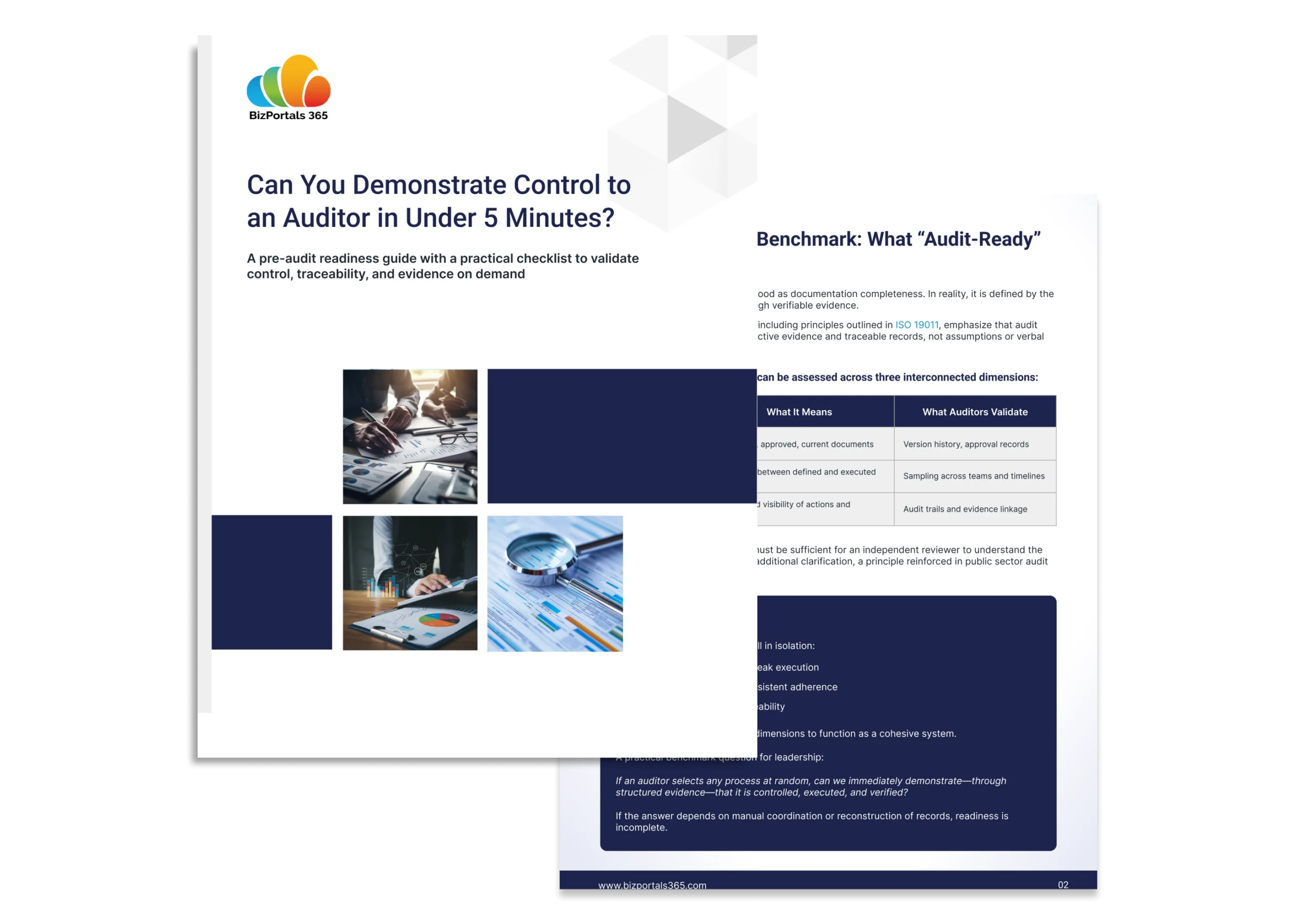
Use it to assess your audit readiness, identify common gaps, and prepare with confidence before your next audit.
Download the GuideWhat Are the Most Common Audit Challenges That Affect Audit Effectiveness?
The usefulness of an audit often depends on how findings are classified, documented, and managed once they are identified. The following challenges are among the most common reasons audit programs struggle to produce consistent, actionable, and improvement-focused results.
1. Inconsistent Finding Classification
One challenge many organizations face is consistency. Similar findings are often classified differently depending on who conducts the audit, making it difficult to prioritize actions or identify meaningful trends over time.
A practical way to classify findings is by asking two questions:
- Is the issue isolated or systemic?
- Does it affect compliance, quality, or customer requirements?
| Isolated Instance | Systemic / Recurring | |
|---|---|---|
| No direct impact on compliance or customer requirements | Observation / Opportunity for Improvement | Minor Nonconformance |
| Direct impact on compliance, customer requirements, or quality | Minor Nonconformance | Major Nonconformance |
Practical Insight:
A group of related minor findings may indicate a larger process failure. Three separate training gaps, for example, may ultimately point to a broader weakness in how training is managed across the organization.
2. Poorly Documented Audit Findings
A finding should provide enough detail for someone else to understand what was reviewed, what evidence was found, and which requirement was not met.
Weak finding:
“Training records were incomplete.”
Stronger finding:
“Reviewed training records for five operators on Line 2. Two operators had no documented training on the current version of the applicable work instruction. Interviews confirmed both employees were following a previous revision. Nonconformance identified against competence requirements.”
Here, the difference is not the amount of text. The difference is evidence. Well-written findings make investigations faster and provide a stronger foundation for corrective action. They also make it easier to trace decisions, verify effectiveness, and understand why a finding was originally raised.
3. Maintaining Auditor Independence with Limited Resources
Auditor independence is one of the most common challenges for smaller quality teams. ISO 9001 requires auditors to remain independent of the activities they audit, but that does not necessarily require additional headcount.
Common approaches include:
- Cross-functional auditors from different departments.
- Rotating audit assignments between qualified personnel.
- Peer audit arrangements with non-competing organizations.
- Independent contract auditors conducting internal audits.
Independence is less about organizational structure and more about objectivity. Auditors should be able to evaluate evidence without reviewing work they directly influence.
Practical Insight:
These challenges rarely exist in isolation. Inconsistent classifications, incomplete findings, and unclear audit ownership often make it harder to identify trends, manage corrective actions, and demonstrate improvement across the quality management system.
What Recurring Audit Findings Usually Reveal About a QMS?
In many cases, the finding itself is not the root problem; it is a symptom of a larger weakness in how a process is managed, monitored, or controlled. Understanding what sits behind a finding helps organizations focus corrective actions on causes rather than symptoms.
| Common Audit Finding | What It Usually Reveals |
|---|---|
| Training records not updated after a procedure change | Training and document control processes are not working together effectively. |
| Outdated documents found at the point of use | Document distribution and version control are not being consistently maintained. |
| Internal audits not completed according to schedule | Audit activities lack sufficient ownership, visibility, or follow-up. |
| Corrective actions closed without effectiveness verification | The focus is on closing findings rather than confirming problems have been resolved. |
| Repeat findings across successive audits | Quality processes may be operating independently, preventing issues from being fully resolved. |
| Risk-based thinking cannot be demonstrated with evidence | Risks may be discussed informally but are not consistently documented or incorporated into decision-making. |
Recurring audit findings often point to disconnected workflows, where quality processes function independently instead of as part of a unified system. A procedure is revised, but training is not updated. A finding is closed, but effectiveness is never verified. Over time, these disconnected activities create patterns that repeatedly surface during audits.
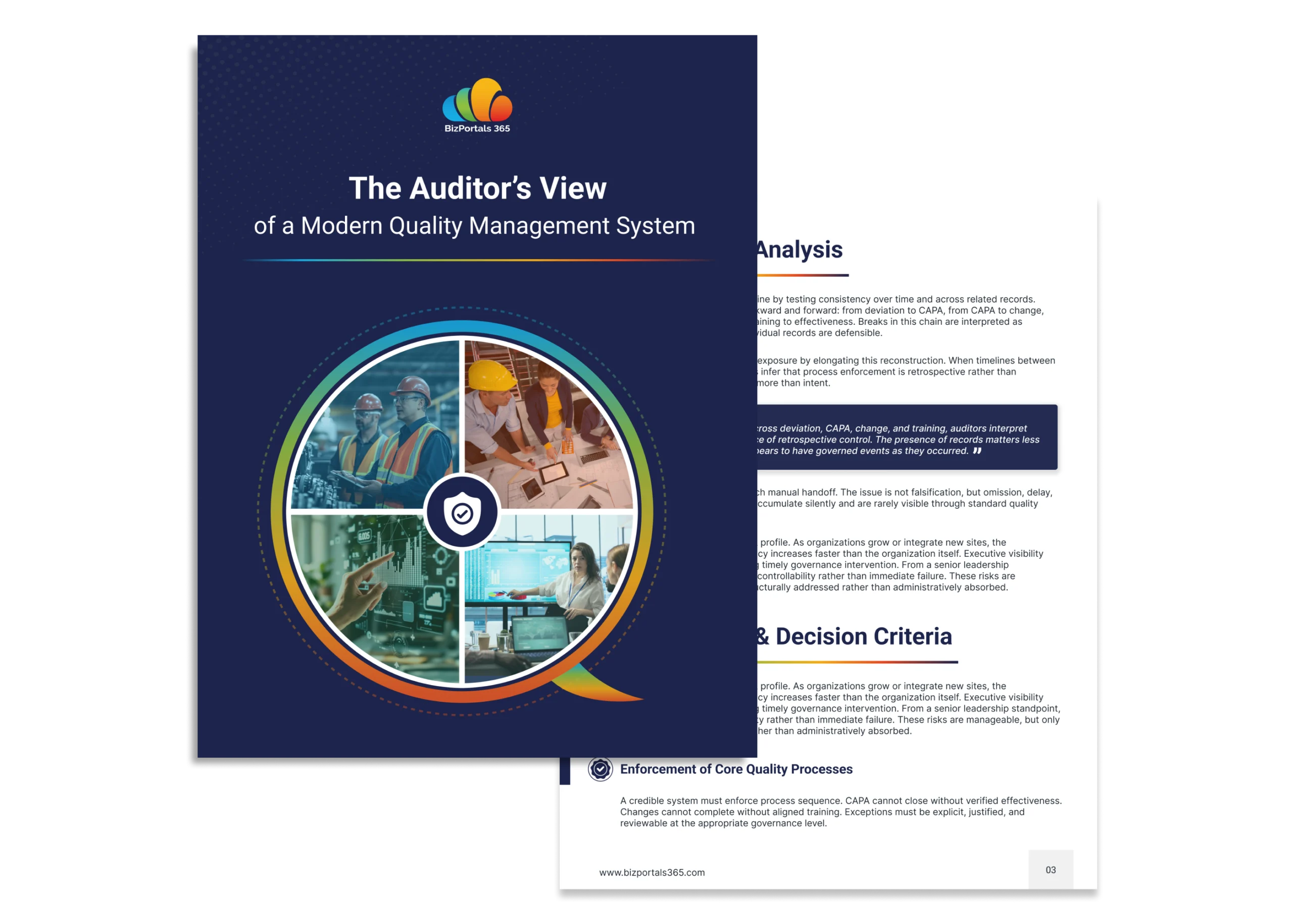
Use it to understand what today's auditors expect from a modern QMS and where organizations most commonly fall short.
Download the WhitepaperWhich QMS Audit Metrics Should You Track?
The most useful QMS audit metrics include finding recurrence rate, CAPA closure time, CAPA effectiveness, audit schedule adherence, and open findings.
Completing audits on schedule is important, but it doesn’t tell you whether your audit program is actually improving the quality management system. The metrics below provide a clearer picture of audit effectiveness, audit readiness, and long-term process performance.
- Finding Recurrence Rate: Measures how often previously identified issues reappear in future audits.
- Findings by Process or Department: Helps identify areas that consistently generate audit findings.
- CAPA Closure Time: Indicates how quickly audit findings move from identification to verified resolution.
- First-Time CAPA Effectiveness Rate: Shows how often corrective actions successfully resolve issues without requiring additional action.
- Audit Schedule Adherence: Tracks whether planned audits are completed according to schedule.
- Open Audit Findings: Highlights unresolved findings that may increase compliance or operational risk over time.
Audit performance is best evaluated through trends rather than individual metrics. Together, these measures show whether the organization is strengthening its quality management system and building confidence for future QMS audits, including ISO certification audits.


What Happens When Audit Findings Aren’t Managed in a Connected System?
Audit findings create value only when they can be tracked, investigated, and resolved. For many organizations, that becomes increasingly difficult when audit records, corrective actions, training data, and controlled documents live in separate spreadsheets, email threads, and disconnected systems. Findings become harder to track, corrective actions take longer to close, effectiveness reviews get overlooked, and recurring issues go unrecognized until they surface again in the next audit cycle.
This is also why the same findings often reappear across audit cycles. The issue is rarely a lack of procedures. More often, the underlying processes responsible for audits, corrective actions, training, document control, and management review are operating independently rather than as part of a connected quality system.
A digital QMS helps address this challenge by bringing audit activities, findings, corrective actions, supporting records, and quality processes into a single system. When audit findings, CAPAs, training records, and controlled documents remain connected, teams spend less time searching for information and more time resolving issues. The result is better traceability, stronger visibility into quality trends, and greater confidence that findings are actually being addressed.
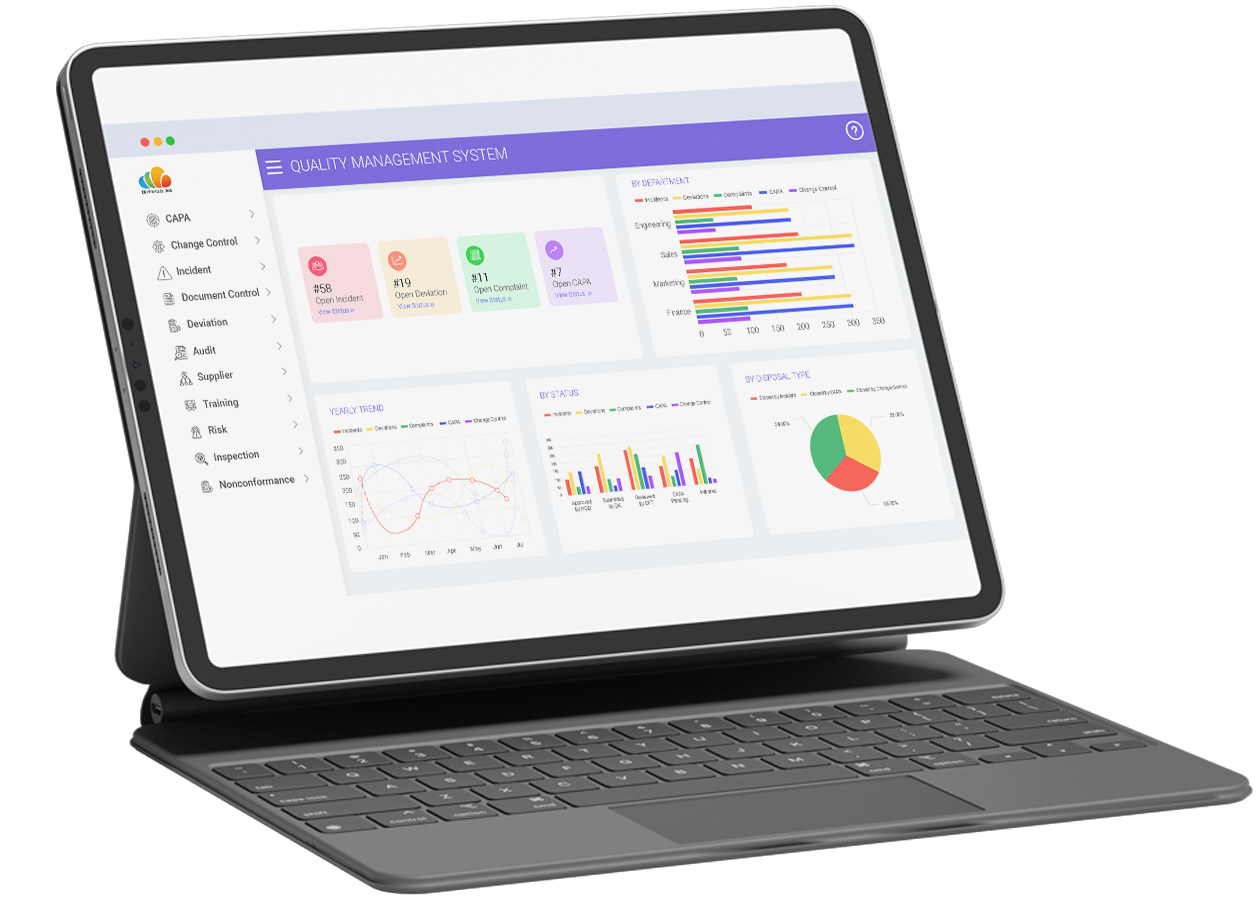
Manage audits, findings, CAPAs, and evidence from one connected system.
Book a Live DemoFAQs
-
How can I prepare effectively for a QMS audit?
Review recent process changes, verify that documents and records are current, confirm corrective actions are complete, and ensure employees understand the procedures they follow.
-
What should a QMS audit checklist include?
A good audit checklist should guide observations, interviews, and evidence collection, not simply verify documents. It should reflect the process being audited, previous findings, applicable requirements, and any known risks.
-
What are the common findings during QMS audits?
Most audit findings result from inconsistent process execution rather than missing documents. Common examples include outdated procedures, incomplete records, ineffective CAPAs, uncontrolled changes, and differences between documented and actual practices.
-
How do quality audits improve business compliance?
Quality audits verify that processes consistently meet regulatory, customer, and internal requirements. They help identify compliance gaps early, improve process consistency, and reduce the risk of repeat issues.
-
How often should a QMS audit be conducted?
There is no fixed frequency. Most organizations follow an annual audit program while auditing higher-risk or underperforming processes more frequently based on risk, previous findings, and business needs.
-
What makes a QMS audit program effective?
An effective audit program is risk-based, consistently reviewed, and supported by timely corrective actions. Its success is measured by sustained process improvement and fewer recurring findings, not simply by completing scheduled audits.
-
How do I measure the effectiveness of a quality management system?
An effective QMS consistently delivers intended results while reducing recurring quality issues. Look for improving trends in audit findings, CAPA outcomes, customer feedback, process performance, and overall operational consistency.
-
What features should I look for in QMS software to ensure compliance with ISO 9001?
Choose software that connects audits, documents, CAPAs, training, and records in one system. A connected workflow improves traceability, reduces manual follow-up, and makes compliance evidence easier to retrieve during audits.